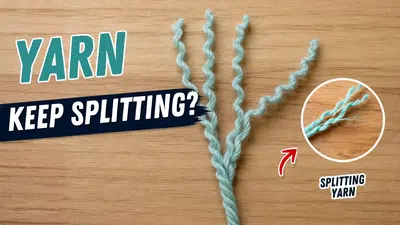
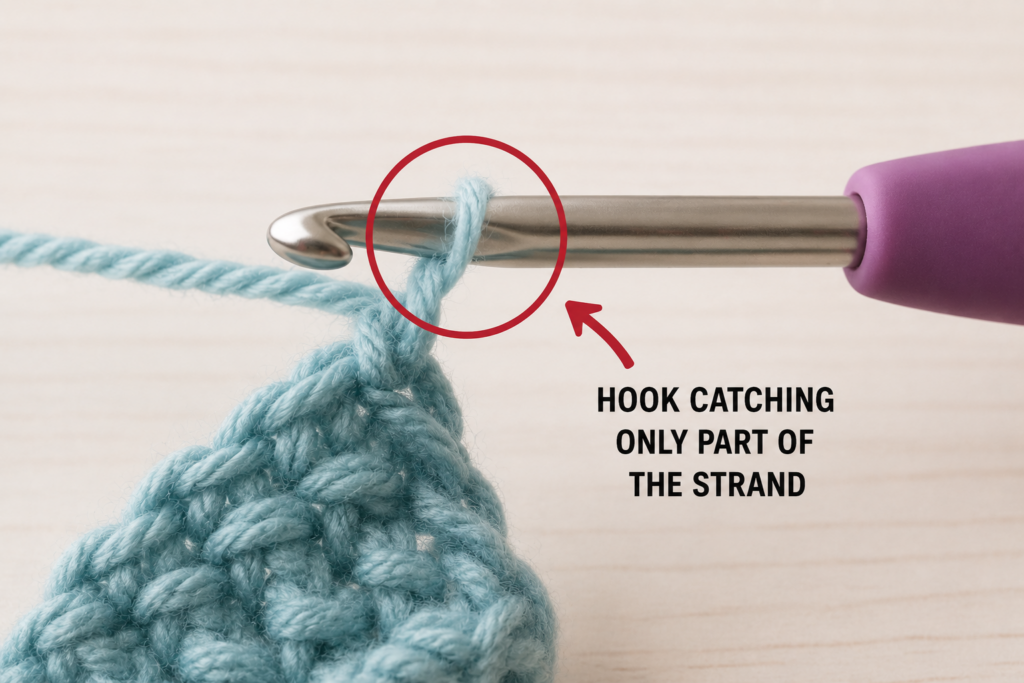
You’re crocheting along, making good progress, when suddenly your hook catches only part of the yarn.
You try again.
It happens again.
Now you’re staring at a loose strand sticking out of your stitch and wondering:
“Why does my yarn keep splitting?”
If that sounds familiar, you’re not alone.
Yarn splitting is one of the most common frustrations beginner crocheters face. In fact, it often appears alongside other beginner crochet problems. Many crocheters notice their stitches don’t quite match the tutorial they’re following or wonder why their finished project looks different from the sample. Hook choice, tension, and yarn selection all play a role, which is one reason your crochet may look different from a tutorial or pattern photo.
After designing hundreds of crochet patterns and teaching crocheters through my blog and YouTube channel, I’ve found that most yarn splitting problems come down to three things: yarn choice, hook size, and tension.
The good news?
Yarn splitting is usually easy to fix once you know what’s causing it.
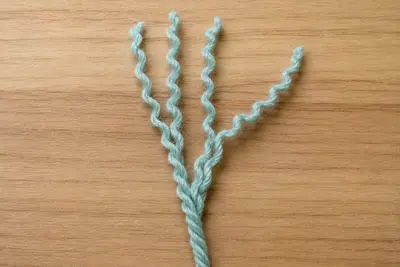
Table of Contents
Quick Answer: Why Does My Yarn Keep Splitting?
If your yarn keeps splitting while crocheting, the most common causes are:
- A crochet hook that’s too small
- Tight tension
- A rough or damaged hook
- Loosely spun yarn
- Yarn that has become untwisted while you work
In most cases, switching to a yarn that’s easier for beginners to use, adjusting your hook size, or relaxing your tension will solve the problem.
Why Does My Crochet Hook Keep Going Through the Yarn?
This is one of the most common questions beginners ask.
If your crochet hook keeps sliding between the strands instead of grabbing the entire yarn, you’re experiencing yarn splitting.
Most often, this happens because:
- Your tension is too tight.
- Your hook is too small.
- The yarn separates easily.
- You’re crocheting faster than your hands can keep up.
When you first learn crochet, your eyes, hands, and hook are all learning to work together. Missing part of the yarn is normal.
Slow down and watch where your hook enters each stitch. Many crocheters find that simply slowing down for a few rows dramatically reduces yarn splitting.
Is Yarn Splitting My Fault?
Usually not.
This is important because many beginners assume they’re doing something wrong.
You’re not.
Some yarns are simply easier to work with than others.
I’ve worked with everything from acrylic yarn to bamboo blends, cotton yarns, chenille yarns, and specialty fibers while designing crochet patterns. Even experienced crocheters encounter yarn splitting with certain yarns.
If you’re just learning, choosing a beginner-friendly yarn can make a huge difference. Many crocheters discover that switching yarns solves problems they thought were caused by their technique.
What Is Yarn Splitting?
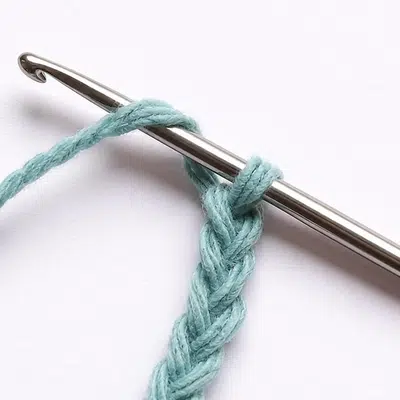
Most yarn is made from several smaller strands twisted together. These strands are called plies.
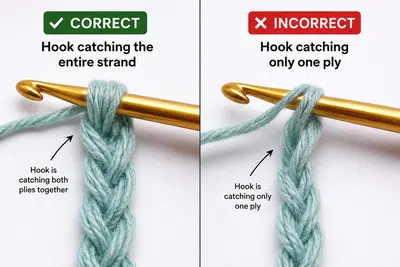
Yarn splitting happens when your crochet hook catches only some of those plies instead of the entire strand.
Instead of pulling through smoothly, the hook separates the yarn.
This can create:
- Uneven stitches
- Frustration
- Slower progress
- Loose strands sticking out of your work
The good news is that yarn splitting rarely ruins a project.
Is It My Hook or My Yarn?
Sometimes it’s difficult to tell.
A simple test is to switch one thing at a time.
Try a different hook with the same yarn.
Then try the same hook with a different yarn.
If the problem disappears when you change yarns, the yarn is probably responsible.
If the problem follows the hook, your hook size, shape, or finish may be causing the issue.
Over the years, I’ve found that many crocheters blame themselves when the real culprit is simply a yarn that wants to split.
The 5 Most Common Causes of Yarn Splitting
1. Your Hook Is Too Small
One of the most common causes of yarn splitting is using a crochet hook that is too small for the yarn.
Smaller hooks create tighter stitches and leave less room for the hook to move through each loop.
As a result, the hook is more likely to catch individual strands.
Understanding crochet hook size can solve many beginner crochet frustrations beyond yarn splitting. Using the wrong size can affect stitch definition, tension, and even how comfortable crocheting feels.
Sometimes moving up just one hook size is enough to fix the problem.
2. You’re Using a Yarn That Splits Easily
Not all yarns behave the same way.
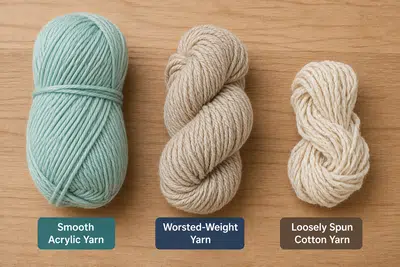
Some yarns have a firm twist that keeps the plies together. Others separate easily and require more attention while crocheting.
Common split-prone yarns include:
- Bamboo blends
- Rayon blends
- Silk blends
- Loosely spun cotton yarn
- Lightweight yarns with little twist
Many crocheters have an easier time learning with worsted-weight yarn because the stitches are easier to see and the yarn is generally more forgiving.
If you’re still building your confidence, choosing a yarn designed for beginners can dramatically reduce frustration.
3. Your Hook Is Catching the Fibers
Sometimes the problem isn’t the yarn.
It’s the hook.
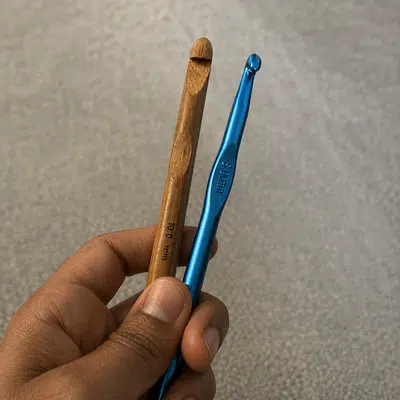
A rough spot, damaged tip, or tiny burr can snag yarn fibers repeatedly.
Run your finger along the hook.
If it feels rough, it may be catching the yarn.
Over the years, I’ve found that smoother crochet hooks for beginners often glide through yarn much more easily than rough or poorly finished hooks.
4. Your Tension Is Too Tight
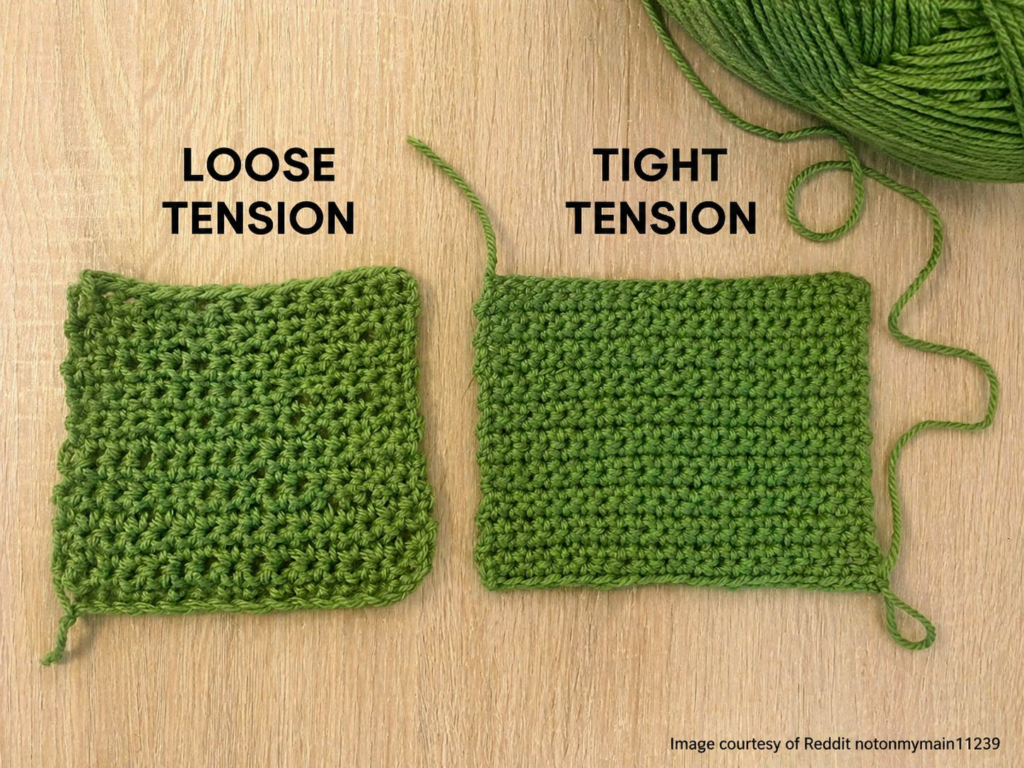
Tight tension is one of the most overlooked causes of yarn splitting.
When stitches are pulled too tightly, the hook has less room to enter the stitch cleanly.
The tighter the stitch, the easier it becomes to catch only part of the yarn.
Tension affects much more than yarn splitting. It’s also one reason your crochet may look different from someone else’s project, even when you’re following the same pattern.
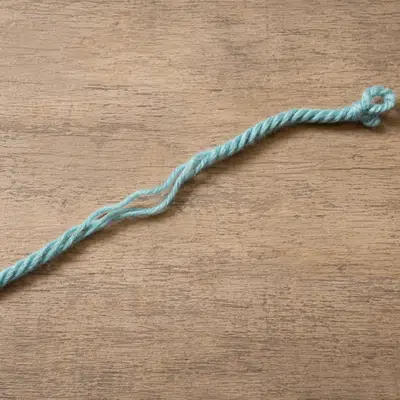
5. Your Yarn Has Become Untwisted
As you crochet, the yarn can gradually lose some of its original twist.
When this happens, the plies begin separating from each other.
This makes it easier for the hook to catch only part of the strand.
If your yarn starts looking flat or separated, let your project hang freely for a few moments. This often allows the twist to return naturally.
What Yarns Split the Most?
When crocheters discuss yarn splitting online, the same yarn types tend to come up repeatedly.
These include:
- Cotton yarn
- Bamboo yarn
- Rayon blends
- Silk blends
- Lightweight yarns with minimal twist
This doesn’t mean they’re bad yarns.
Many of them create beautiful finished projects.
They’re simply less forgiving when you’re learning.
If you’re struggling, it’s often easier to build your skills with a beginner-friendly yarn and return to these specialty fibers later.
What Yarn Should Beginners Use Instead?
If you’re tired of fighting split yarn, I recommend:
- Smooth acrylic yarn
- Medium-weight yarn
- Firmly twisted yarn
- Light-colored yarn
Many beginners learn fastest with worsted-weight yarn because it’s easy to see the stitches and forgiving enough to help build confidence.
Pairing a beginner-friendly yarn with one of the recommended crochet hooks for beginners can make learning crochet much more enjoyable.
Should I Start Over If My Yarn Keeps Splitting?
Usually not.
A few split stitches rarely ruin an entire project.
If you notice a split stitch immediately, simply pull it out and redo it.
As your crochet skills improve, you’ll become much better at spotting split stitches before they become noticeable.
Most finished projects contain tiny imperfections that nobody else will ever see.
How to Stop Yarn Splitting Immediately
If your yarn keeps splitting right now, try these fixes:
- Slow down.
- Relax your tension.
- Move up one hook size.
- Switch to a smoother hook.
- Let the yarn retwist itself.
- Use a yarn with a tighter twist.
- Watch where your hook enters each stitch.
If you’re unsure which size to try next, understanding crochet hook sizes in letters, numbers, and millimeters can help you make the right adjustment.
Frequently Asked Questions
Why does my yarn keep splitting when I crochet?
The most common causes are tight tension, a hook that’s too small, loosely spun yarn, a rough hook, or yarn that has become untwisted.
Can a crochet hook cause yarn splitting?
Yes. A rough, damaged, or improperly sized crochet hook can catch individual strands and increase yarn splitting.
What yarn splits the least?
Smooth acrylic yarn with a firm twist is often the easiest option for beginners. Many crocheters have success starting with one of these best beginner yarns.
Does cotton yarn split more than acrylic yarn?
Often, yes. Cotton yarn typically has less elasticity and may separate more easily than acrylic yarn.
Is yarn splitting a beginner mistake?
No. Beginners experience it more often, but experienced crocheters encounter yarn splitting too.
Should I use a bigger crochet hook if my yarn keeps splitting?
Sometimes. Moving up one hook size can reduce the likelihood of catching individual strands. A quick look at a crochet hook size chart can help you choose the next size up.
Do UK and US crochet terms affect yarn splitting?
No. Yarn splitting has nothing to do with terminology. However, understanding the difference between UK and US crochet terms can prevent confusion when following patterns from different countries.
Final Thoughts
If you’ve been asking yourself, “Why does my yarn keep splitting?” remember that the problem is usually your hook size, yarn choice, tension, or yarn construction—not your ability as a crocheter.
Every crocheter encounters split yarn at some point.
The key is identifying the cause and making a small adjustment.
Once you do, you’ll spend less time fighting your yarn and more time enjoying your crochet projects.