Crochet patterns can feel incredibly confusing when you first look at them.
You open a pattern and suddenly you are staring at abbreviations, symbols, parentheses, stitch counts, commas, and random numbers that somehow expect you to magically understand what to do next.
And honestly?
A lot of crocheters already know HOW to crochet before they learn how to READ crochet patterns.
You may already know how to make a single crochet, double crochet, or chain stitch. But when those same stitches are written like this:
“Ch 1, sc in next 5 sts, rep from * across”
…it suddenly feels like a completely different language.
If crochet patterns have ever made you feel like you accidentally opened a math textbook instead of a crochet project, you are definitely not alone.
The good news is that crochet patterns are not nearly as complicated as they look.
Once you understand how patterns are structured, they start making much more sense. And after a while, your brain begins reading crochet shorthand almost automatically.
As a crochet designer and tutorial creator, I have spent years teaching beginners how to understand crochet techniques through both written patterns and video tutorials. One thing I consistently see is that most beginners are not struggling with crochet itself. They are struggling with understanding crochet language.
In this guide, I am going to break down crochet patterns in a beginner-friendly way so you can finally understand crochet abbreviations, repeats, stitch counts, parentheses, and asterisks without feeling overwhelmed.
If you prefer video tutorials, I also created a full video version of this lesson that walks through everything step-by-step.
Table of Contents
What Are Crochet Patterns?
Crochet patterns are simply instructions written in shorthand.
That’s it.
They are designed to save space and make instructions shorter and easier to repeat.
Think about texting abbreviations. If you had never seen “LOL” or “BRB” before, they would look confusing too. But once you learn what they mean, your brain reads them automatically.
Crochet patterns work the exact same way.
Instead of writing:
“single crochet in the next 5 stitches”
a pattern shortens it to:
“sc in next 5 sts”
Once your brain connects the abbreviation to the stitch movement, patterns become much easier to follow.
If you are completely new to crochet, understanding yarn weights and beginner tools can also make crochet patterns easier to understand.
Helpful beginner guides:
Why Crochet Patterns Feel So Overwhelming at First
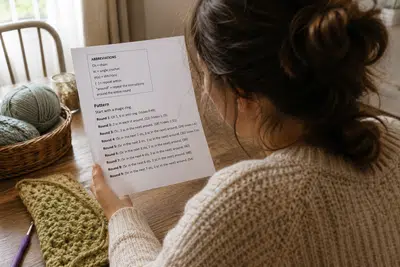
If crochet patterns feel overwhelming right now, you are absolutely not alone.
Most beginners are not struggling because they are “bad at crochet.”
They are struggling because crochet patterns are written in an entirely new shorthand language your brain has not learned yet.
When you first look at abbreviations, stitch counts, parentheses, and repeats all together, your brain tries to process everything at once. That is why crochet patterns can initially feel intimidating.
One thing I have noticed after years of teaching crochet tutorials is that beginners usually understand the stitches themselves much faster than they understand the formatting of a pattern.
But once crocheters learn how repeats and abbreviations work, their confidence grows quickly.
And honestly, this is usually the exact moment where crochet starts becoming much more enjoyable.
Common Crochet Abbreviations for Beginners
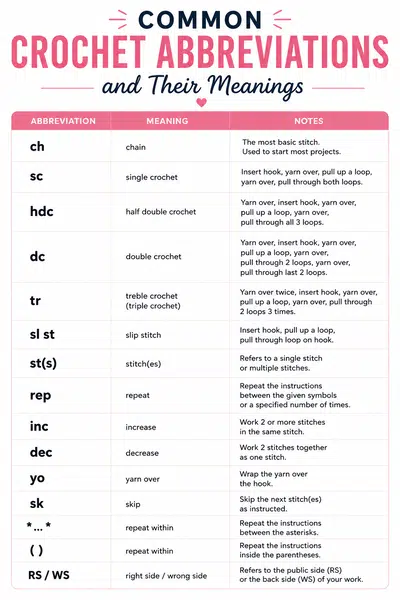
Almost every crochet pattern uses abbreviations. These abbreviations shorten instructions and help keep patterns from becoming extremely long.
Some of the most common crochet abbreviations include:
- ch = chain
- sc = single crochet
- hdc = half double crochet
- dc = double crochet
- tr = treble crochet
- sl st = slip stitch
- st = stitch
- rep = repeat
- inc = increase
- dec = decrease
The important thing to remember is this:
You do NOT need to memorize all of these immediately.
Most crochet patterns include a key or abbreviation section that explains what each abbreviation means. Even experienced crocheters still check abbreviation keys sometimes.
Over time, your brain naturally starts recognizing these shorthand terms through repetition.
Another important thing beginners should know is that crochet terms are not always universal. Some patterns use US crochet terminology while others use UK crochet terminology. This can completely change the meaning of stitches inside a pattern.
Learn more about the differences here:
You can also view standardized crochet terminology through the:
Read Crochet Patterns Out Loud
[IMAGE IDEA: You reading a crochet pattern while crocheting. Include visible written rows on screen or paper.]
One of the easiest ways to learn how to understand crochet patterns is to read them out loud.
Seriously.
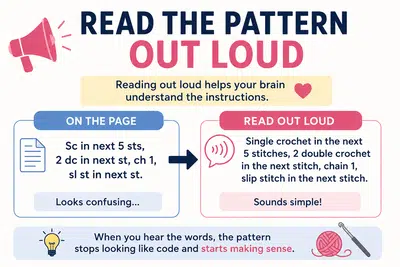
This sounds simple, but it helps tremendously.
When beginners look at a pattern, they often see random letters and symbols. But reading the pattern aloud helps your brain process the instructions differently.
For example:
“sc in next 5 sts”
becomes:
“single crochet in the next 5 stitches.”
Suddenly, the pattern stops feeling like code and starts sounding like actual crochet instructions.
This is also why many crochet video tutorials—including mine—show the written rows directly on screen while teaching. It helps connect the abbreviation, the written instruction, and the hand movement all at the same time.
How to Read Crochet Repeats
Repeats are one of the biggest things that confuse beginners learning how to read crochet patterns.
You might see something like this in a pattern:
“sc, sc, 2 dc in next st… repeat 7 times”
At first glance, it can feel overwhelming.
But repeats are actually very simple.
The pattern is just telling you to repeat the same sequence over and over again.
In this example, you would:
- single crochet
- single crochet
- place 2 double crochet in the next stitch
- repeat those steps again
That’s it.
One thing I consistently notice when teaching crochet beginners is that once they understand repeats, their confidence with written patterns improves dramatically.
Because now the pattern stops looking random.
It starts looking organized.
Once you understand where the repeat starts, crochet patterns become much easier to follow.
Crochet Parentheses Explained
Patterns often use parentheses to group stitches together.
For example:
(sc, sc, 2 dc in next st) x7
This means everything INSIDE the parentheses gets repeated 7 times.
So instead of rewriting the same instruction repeatedly, the pattern groups the repeated section together to save space.
This is one reason crochet patterns look intimidating at first. But once you realize the parentheses are simply grouping instructions together, they become much easier to understand.
What Do Asterisks Mean in Crochet Patterns?
Asterisks are another common way crochet patterns show repeats.
You might see something like:
sc in next 2 sts, 2 dc in next st rep from * across
The first time beginners see this, their brains often immediately panic.
But an asterisk is simply marking the section you need to repeat.
Think of it like the pattern saying:
“Repeat THIS part.”
So in the example above, you would:
- single crochet in the next 2 stitches
- place 2 double crochet in the next stitch
- go back to the beginning asterisk
- repeat the section again
Once you identify where the repeat starts, the pattern becomes much easier to follow.
What Do Stitch Counts Mean in Crochet Patterns?
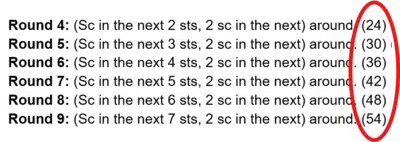
[IMAGE IDEA: Crochet pattern with stitch counts circled at the end of rows.]
Stitch counts are the numbers you usually see at the end of a row or round.
Examples include:
- (12)
- (24)
- (48)
These numbers tell you how many stitches you should have after completing the row.
Think of stitch counts like checkpoints.
The pattern is basically asking:
“Are we still on track?”
If the pattern says you should have 24 stitches but you count 31, something likely went wrong somewhere in the row.
And honestly, stitch counts are there to HELP you.
They help you catch mistakes early before you continue too far into the project.
Sometimes stitch counts are written inside parentheses, and sometimes they appear at the end of the row without parentheses. Either way, they are simply there to help you stay on track.
They are NOT another crochet instruction.
If your crochet projects frequently look uneven or completely different from the original pattern, this article may also help:
Break Crochet Rows Into Smaller Sections
[IMAGE IDEA: Crochet row broken apart visually into comma-separated sections with arrows.]
One of the biggest mistakes beginners make is trying to read an entire crochet row all at once.
Don’t do that.
Instead, break the row into smaller sections.
Read to the next comma.
Stop.
Complete that step.
Then move to the next section.
Commas and periods act like pause buttons in crochet patterns.
This makes patterns feel much less overwhelming because you are only focusing on one small instruction at a time instead of trying to process the entire row all at once.
Practice Reading a Crochet Pattern
Now let’s practice reading a few crochet pattern rows together.
Each example builds on the previous one.
Example 1
Ch 1, sc in next 5 sts, sk st, 2 sc in next st.
Broken down, this means:
- chain 1
- single crochet in the next 5 stitches
- skip the next stitch
- place 2 single crochet in the next stitch
Once you slow patterns down, they become much easier to understand.
Example 2
Ch 1, sc in next 5 sts, sk st, (2 sc in next st, sc in next st) 3 times.
This example introduces parentheses.
Everything inside the parentheses gets repeated 3 times.
So instead of rewriting the instructions repeatedly, the pattern groups them together.
Example 3
Ch 1, *sc in next 5 sts, (2 sc in next st, sc in next st) 3 times, rep from * across.
This example combines:
- abbreviations
- parentheses
- asterisks
At first glance, this row looks much more intimidating.
But it’s still using the exact same concepts you already learned.
The pattern is simply telling you to repeat the grouped section across the row.
And this is usually the moment where many beginners realize:
“Ohhh… this actually makes sense now.”
Learn Crochet Patterns Faster With Video Tutorials
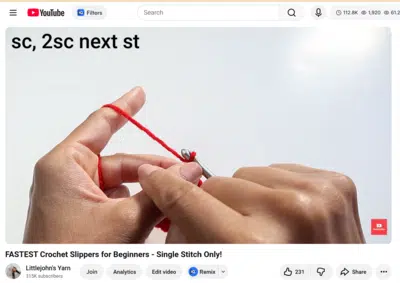
If written patterns still feel intimidating, try using both a written pattern and a video tutorial together.
Many crochet YouTubers—including me—create both a video tutorial and a free written pattern for the same project.
Always check the description box for a pattern link.
This is one of the easiest ways to naturally learn how to read crochet patterns because you can watch the stitch demonstration, follow the written instructions, and connect the movements to the pattern language at the same time.
Over time, your brain starts recognizing the instructions automatically.
Frequently Asked Questions About Crochet Patterns
How do beginners read crochet patterns?
Beginners learn crochet patterns by understanding abbreviations, repeats, stitch counts, and grouped instructions. The easiest way to learn is to break rows into smaller sections and read the pattern slowly.
What does rep mean in crochet?
“Rep” means repeat. It tells you to repeat a section of stitches again.
What do parentheses mean in crochet patterns?
Parentheses group stitches together. Everything inside the parentheses gets repeated a certain number of times.
What does the asterisk mean in crochet patterns?
An asterisk marks the section of stitches that should be repeated throughout the row or round.
Why are crochet patterns so confusing?
Crochet patterns feel confusing at first because they use shorthand abbreviations and grouped instructions. Once you learn the basic formatting, patterns become much easier to understand.
How do I know if a crochet pattern uses UK or US terms?
Most crochet patterns state whether they use US or UK terminology near the beginning of the pattern. Always check before starting, as stitch names can vary across terminology systems.
Final Thoughts on Learning How to Read Crochet Patterns
Learning how to read crochet patterns can feel overwhelming at first, but it truly gets easier with practice.
Most crochet patterns are simply abbreviations, repeats, grouped instructions, and stitch counts.
Once you stop trying to read the entire pattern all at once and start breaking it into smaller sections, written patterns become much easier to understand.
And honestly, once crochet patterns finally “click,” an entirely new world of crochet projects opens up.
You’re no longer limited to only following videos.
You can confidently explore written patterns, experiment with new designs, and understand exactly what your crochet project is asking you to do.