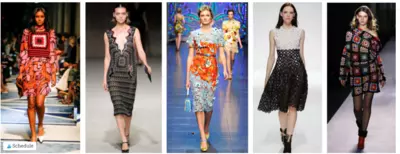
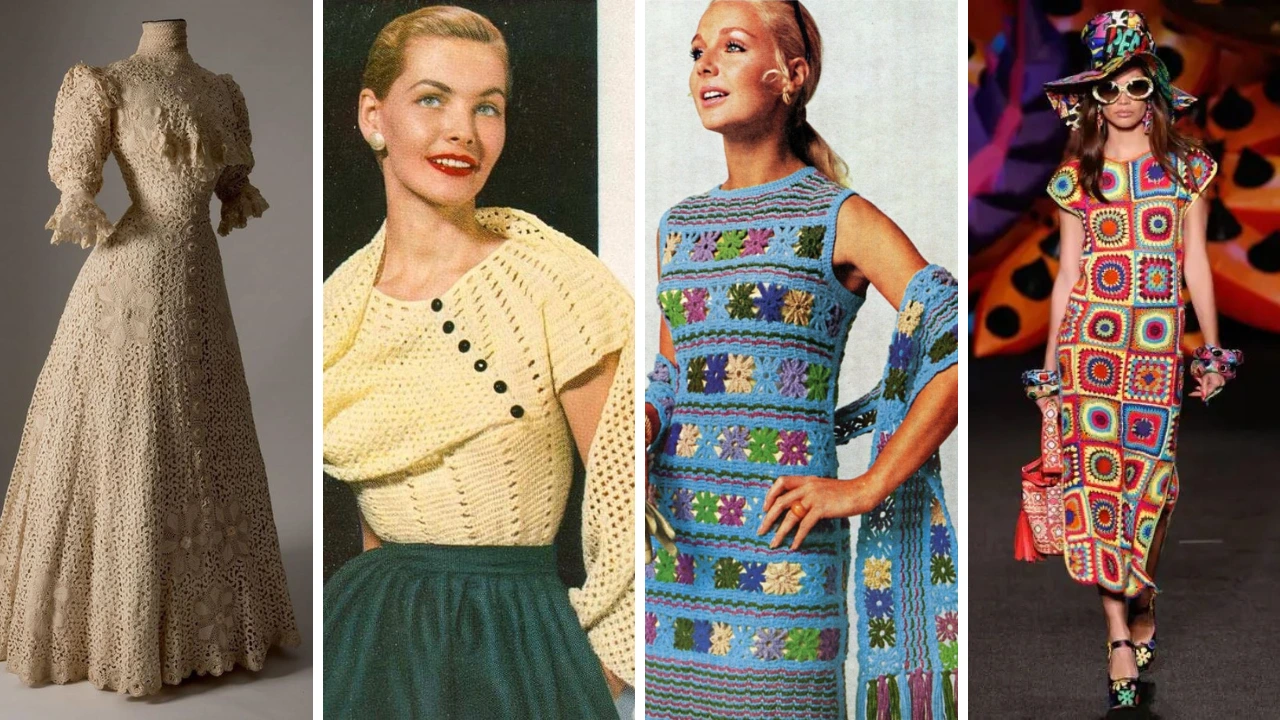
This is part 2 to my post about the history of crochet. Go back and check that one out if you want to learn about where and when crochet was invented, as well as who invented crochet?
The art of crochet has a rich and fascinating history that stretches back to 6500 BC! That adds up to a whole lot of stitches over the years. But nothing has changed the history of crochet as much as the last century.
Today we’ll learn more about how the art of crochet has evolved in the past 100+ years and the trends the craft has gone through, starting with the 1900s.
1900s
In the US, Crochet laces were new and peaking between 1910 and 1920.
Crochet became even more elaborate in texture and complicated stitching. Early in the 1900s, new publications arose using crochet threads using brightly colored silk and elaborate beading.
After World War 2 into the early 1960s, the craft remained primarily as a homemakers’ art. Until the late 1960s and early 1970s when the new generation renewed interest in crochet, particularly in the United States & UK with many funky designs.
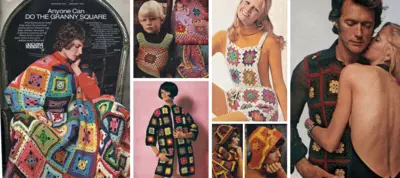
Granny squares become super popular around this time. You were able to find this easy pattern on everything from clothing, bags & decor. The granny square has yet to go out of style. I still see it on the runway or on celebrities, year after year.
1980s Crochet Popularity Decline
Fashion of the 1980s placed heavy emphasis on cheap clothes, fashion accessories, and very big poofy hair. The clothes were bright and loud. Fashion changed, as a reaction against THE “granny square loving hippie” movement of the past decades.
The 80s were full of the preppies, punks & B-boys, not a great breading ground for yarn crafts.
The popularity of crochet showed a sharp decline during this period in the Western world. Sales of patterns and yarns slumped, as the craft was increasingly seen as old-fashioned and children were rarely taught yarn crafts in school.

Not to mention that machine-knitted items were a lot cheaper and more available, WHICH made it a no-brainer purchase. They also came in unique designs (perfect for the 80s), which gives consumers access to quick, fast & cheap yarn-made items.
Crochet & knitwear lost popularity over the new fashions, such as spandex, ripped jeans & mullets. Micro-knit synthetic fabric is produced more cheaply and quickly. These fabrics could also easily be printed with fashionable designs. Although made from knit fabric, they are not considered knitwear.
These new trends, along with moving away from formality in clothing, Knitwear became associated with “Fancy casual” wear. Dressing up for everyday wear was unnecessary.
Like how I go to the store in my Pjs
1990s Crochet Magazines Decline
By the 1990s, many suppliers to the home crochet market ceased to produce or sell yarn, while local shops experienced a sharp decrease in numbers. Despite this, home crocheting still had a very strong and loyal following.
The 90s brought another fashion change & changing views toward the craft of crochet.
Fashion & Technology was changing at a fast pace. Yarn crafts were seen as old fashion and at its lowest popularity. The remaining support came from the crochet lovers of the 60s &70, books, magazines, and Craft Fairs for those wanting to share their skills with others.
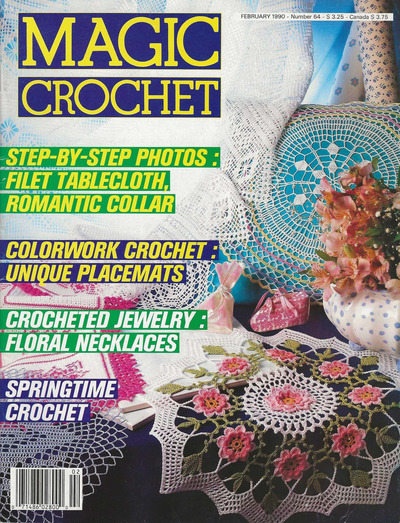
But newer generations weren’t picking up on the craft. Why crochet, when you just got introduced to the World Wide Web!?!
But what was once thought to be the final nail in the coffin, actually was the boost that crochet needed to survive this new technological age.
The internet-enabled crocheters to share advice, patterns, and experience, but also it meant that home crocheters had direct access to supplies, not needing local yarn stores or books.
These trends have continued, to the detriment of small yarn shops. If you would like me to do a video on that topic, comment down below.
The History of Crochet in the 2000s
The 2000s brought with it a new online crochet community. Once a solo craft, it was now able to be shared with friends all across the world!
According to Allison Maynes’s study about the effects of loneliness & connections of female crocheters & knitters in Facebook groups. She states, “Regardless of geographical distance, or never [physically meeting members], the ties they develop become significant as they share their interest to knit or crochet, their images of finished items or frustrations at problems to solve”.
Tons of communities were showing up online at the time. Were you a member of any online yarn group in the early 2000s?
Yarn Bombing Makes it’s Mark on the History of Crochet
Another unique practice starting to arise at this time, Yarn bombing. The practice is believed to have originated in the U.S.
The start of this movement has been attributed to Magda Sayeg, from Houston, who says she first got the idea in 2005 when she covered the door handle of her boutique with a custom-made cozy.
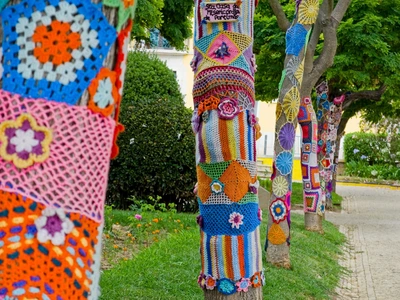
Since then yarn bombing’s popularity has spread throughout the world.
A well-known famous Crochet Yarn Bomber, London Kaye creates yarn bomb graffiti and, in addition to her art installations, creates advertisement yarn bombs for brands like Valentino and Miller Lite.
Kaye has received backlash for her installations when they are hung in public unauthorized, and one installation in Bushwick called “Moonshine Kingdom” was met with arguments, that “sprayed graffiti” is prosecuted as illicit, while trendy yarn graffiti is not criminalized.
Public outcry concerning the installation labeled this type of graffiti a symbol of gentrification, although an article by The New York Times claims a double standard in criticism of yarn bombing, and that women’s work is seen as “cutesy” and inherently less valuable.
Yarn bombing has been under MORE scrutiny for the potential negative environmental impact that the yarn can have when placed on plant life.
According to Odyssey, yarn can restrict sap production on trees and constrict growth. The knitted or crocheted material requires removal and cleaning up; if left behind, installations become soggy and synthetic fibers litter the environment.
What is your opinion on the subject?
The Disappearance of Crochet Magazines
Being such a niche industry, crochet magazine sales began to decline. Due to cheaper, and easier to access digital patterns instead of paper magazines. Crochet is a small portion of the already niche industry of fiber arts.
Most magazines are released every other month or quarterly. According to Feltmagnet.com, The fact that magazines today aren’t published as frequently reflects the need to limit production in the market to keep it affordable to print these magazines and to make sure that they don’t have to disappear off of the market as well!
Crochet books & magazines were once the heart of our crochet subculture. But it’s hard to connect with just a page. Online magazines not only offer patterns, but articles, videos, and more, they bring connection and enrichment to crocheters worldwide.
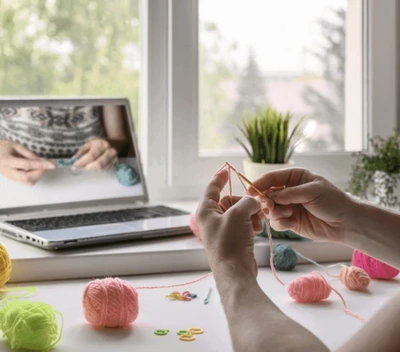
As the internet progressed, so did the craft of crochet. The internet allows a larger crochet community to form. We were able to share our interests and learn from each other, whether across the street or across the globe.
Patterns from both print and online sources have inspired groups (known as crochet-a-longs, or CALs) centered on crocheting a specific pattern. Crochet podcasts have also emerged, information-rich crochet blogs, and online magazines. Traditional designs and techniques, that had been preserved by a relatively small number of crocheters, are now finding a wider audience as well.
Lack of Diversity
You may have noticed, throughout the history of crochet, the lack of diversity in the craft. In the early 2010s before I ever started my own YouTube channel. It was rare to see a person of color. The few times I did it were the Double Crochet Twins, who worked with Red Heart at the time, & Twinkie Chan, both I think deserve their own video for being OG pioneers.
Yarn companies & Yarn magazine were the people in charge of creating & finding Crochet influencers & designers. 99% of the time, those designers were white. Leading to the false belief that crochet was solely a white craft.
If you wanted to crochet, you had no other option but to follow the pattern that was available to you.
But thanks to the internet, POC designers found a way to get their patterns seen.
Self-published pattern designers
During the 2010s Crochet blogs with free patterns, Etsy & Ravelry took off. Offering ways for self-published crochet designers to get their work into the world. Without asking the MAN for permission!
The craft began to grow at a faster pace. Once it went to YouTube & became a moving visual medium, it changed forever.
A little YouTube fun fact, on July 23, 2006, one of the first crochet videos was uploaded to YouTube by Tripiano.
Some of the first English-speaking Crochet YouTubers were, The Crochet Crowd & Natazia. If you know any Early Crochet YouTube pioneers, please comment down below.
These early pioneers brought me back to crochet. I was able to watch it on my phone or find a cool free pattern on my computer.
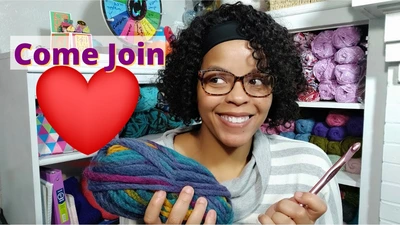
I didn’t have to buy a crochet book or magazine. I chose the designers I liked & many other people around the world were doing the same. People became dedicated followers to Bag O Day Crochet or Jayda in Stitches. Thus began the Crochet Influencer.
I’m sure this was not their intention, and both of these women are the most modest women I know, but once you put a face to something, you have the potential to become a star.
(Name Crochet YouTube Stars)
2020s Current Crochet Trends
During the beginning of the Pandemic, the flood gate of new crocheters came pouring in. Whether to pass time, disconnect from a screen, or cope with anxiety, people started picking up hooking.
With use of social media, crocheters are able to showcase their love for the craft. Take a scroll through Instagram or TikTok to find Gen Zers making magic with yarn. Teens and 20-somethings document their creative process, from inspiration through to completion.
Affordability is a top priority, with many replicating garments that would otherwise be well out of their price range. Like Harry Style’s JW Anderson sweater that cost $1500!
Some content creators will actually teach you to make something, while others simply take you along for the cozy, satisfying ride.
Fashion Industry
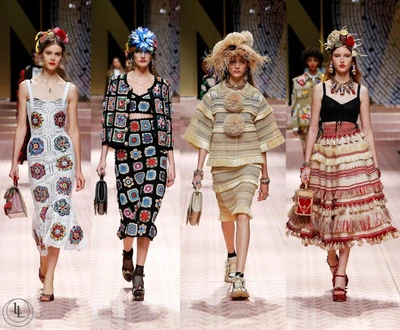
The fashion industry is definitely taking notice. Your grandma’s favorite pastime is a major trend. Spotted on the runways of major brands like Bottega Veneta, Fendi, and Dior, as you can see crochet isn’t going anywhere.
Tops, dresses, pants, swimwear, and even accessories like bags, hats, and shoes made with crochet.
Delsy Gouw, the founder of knitwear accessories label Memorial Day, turned her own crocheting hobby into a business after losing her job in the midst of COVID-19. Now, her hats and bikinis are seen on trendsetters like Kylie Jenner, Bella Hadid, and Ella Emhoff.
She says, “The way crochet is done is truly so intricate, unique, and is made to last,” Gouw told TZR in February about the technique. “Crochet can only be done by hand so I think there is something special about having an accessory that is unique and handmade.”
Learn more about Crochet machines here. I did a whole video about it.
Crochet & Fast Fashion
But that was Crochet High Fashion, let’s talk about the Low Down Dirty Fast Fashion.
Have you seen the crochet top everybody is talking about from Walmart? This piece has a lot of people pissed off & understandably so.
We feel as if big business is trying to profit off the work of the small designer. They see you online doing it big & want to cash in on it themselves. As a lone Sleuth, I tried to research where they are manufacturing these crochet items.
But first, you need to learn about Fairtrade.
Fairtrade brings products from poorer regions into more developed economies. A minimum price is agreed on to make sure that producers will be able to earn a living wage & have safe working conditions.
Walmart is currently Fair Trade Certified, so I can’t definitively say that these items were made in a sweatshop. And they claim to be moving in a more sustainable direction. But I’m not going to pretend like Walmart didn’t have a bloody past.
In 2012, a garment factory fire in Bangladesh killed at least 112 Another incident in 2013 Rana Plaza collapse caused over 1,000 garment workers to die on the job.
Since this incident, Walmart has cleaned up its ways. According to their website, they’re now offering Fair Trade Fashion called Free Assembly, which focuses on sustainable materials — though largely unmentioned companies.
Free Assembly’s relies on Fair Trade factories, at least in its denim line, is similar to what many “ethical fashion” brands used to assure customers that they’re not underpaying their workers.
Trust me, I tried to find them. If you know any information, please let me know down below.
A Huge problem surrounding Fair Trade organizations is that they often engage with companies that behave unethically. Fair Trade cannot guarantee that organizations will be able to sell all their “Fair Trade Certified products” under those agreed conditions, which include minimum pricing and premiums.
But if you want to learn more about crochet & fast fashion, you’re going to want to look at this article HERE.
Conclusion of the History of Crochet
Crochet has long been seen as an activity meant exclusively for mothers and stay-at-home wives and has often been associated with a homely look, but these misconceptions are being challenged currently.
I believe since the 60s & 70s, the soul of crochet has been put back into the craft again. Online magazines, YouTube, Social media & online communities lead to home-designed crochet items that reflect their personal style. Not just following a pattern a yarn manufacturer tells you to make.
More patterns are being sold by indie crochet designers on online platforms, and there are even more amazing crochet patterns on YouTube, such as my Channel.
Crochet doesn’t have to be a dying craft. The history of crochet needs to be preserved so that it can be carried on in the future. We should start digitizing crochet patterns and distributing them around the world so that more people learn about this art form.