

In a quiet suburb of Johns Creek, Georgia, Penn Collins sits on the same bench at Newtown Dream Dog Park every day. As his dog Josephine plays nearby, Collins picks up his crochet hook — and knits warmth, hope, and compassion. What began as a humble hobby has grown into an extraordinary mission: over 6,000 crocheted hats distributed to people facing illness, hardship, or homelessness. AJC
A lifeline for idle hands — and a heart in need of healing
Collins first taught himself to crochet about six years ago. Living on disability and feeling adrift in his condo, he turned to online tutorial videos and began by making scarves. After 50 scarves, he shifted to hats — finding the repetitive motion, rhythm, and creativity soothing: “I find it soothing, and it grounds me.” AJC
He describes the experience as transformative: though he sees himself as “the 6-foot-3, silver-bearded man who sits and crochets,” when he’s knitting, he feels like he disappears — and finds peace. AJC
Giving back — hat by hat, stitch by stitch
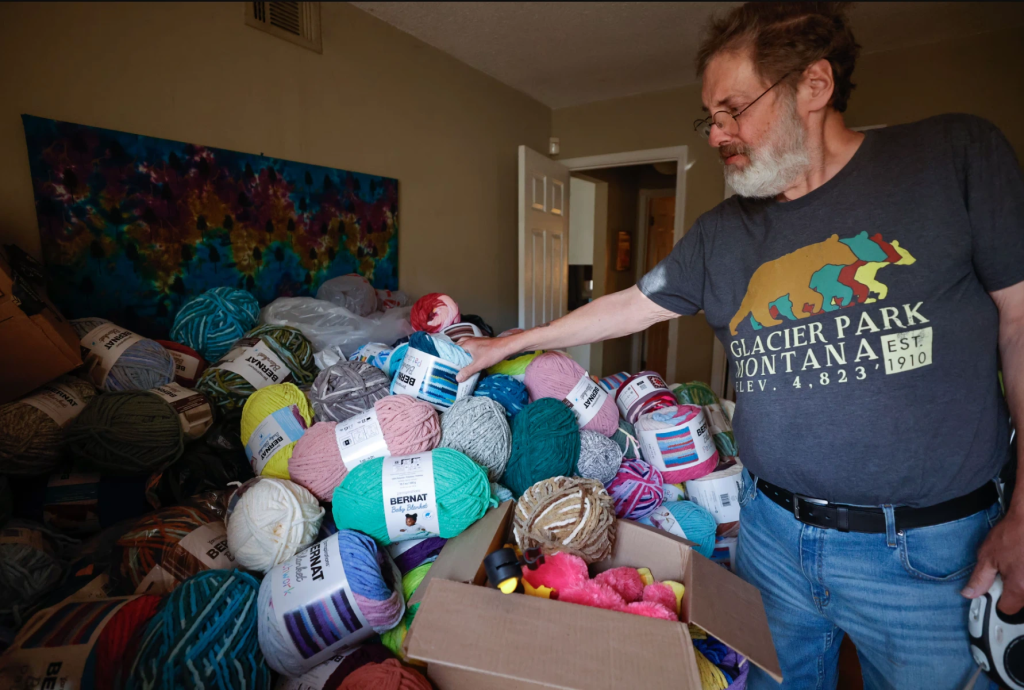
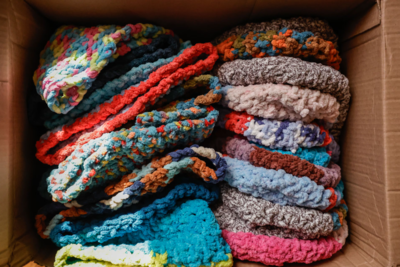
Eventually, the many hats began to pile up. Collins decided to begin donating them — first to the oncology unit at Emory Johns Creek Hospital, then to groups such as North Fulton Community Charities, hospice organizations, foster-care charities, and efforts supporting people experiencing homelessness or substance abuse. AJC
This year alone, North Fulton Community Charities received about 400 hats — and staff described recipients as “immensely grateful.” AJC
One woman got a hat and reacted “like a kid at Christmas,” Collins recalls. Another man thanked him for the gift — and having told Collins that brought him to tears in his car afterward. AJC
Healing personal wounds through kindness
The generosity behind the hats stems not just from boredom or free time — but from a deeper, more personal place.
Collins has spoken candidly about struggles with mental health, trauma, and a painful childhood. He has described wrestling with feelings of failure — never earning a degree, never landing a stable career, never finding a long-term partner. Crochet is his way of saying: “I am doing something.” AJC
Then came a life-changing moment: Collins was diagnosed with cancer. During treatment at Emory Johns Creek Hospital, he discovered that some of the hats he had donated were waiting on patients for the taking — and saw firsthand how something simple could make someone feel cared for. AJC
That moment crystallized the meaning behind his mission: to give others a small comfort — a feeling of warmth, dignity, and hope.
Why his story resonates
- Healing through creation: For Collins, crocheting is more than craft — it’s therapy. The act of knitting gave structure and calm to a life once marked by instability.
- Unconditional compassion: His hats are donated without expectation of recognition or reward — just the hope of lifting another person’s spirits.
- Affordable kindness: A handmade hat may cost little in materials, but its value to recipients — a cancer patient or someone sleeping on the street — can be profound.
- Resilience and redemption: Collins’s life shows that even people who have faced hardship and self-doubt can find meaning and purpose through creativity and service.
What we can learn — and do — from the “silly hat guy”
In a world where grand gestures and high-impact philanthropy often make the headlines, Collins reminds us that small acts — sustained consistently — can change lives. A hat, a piece of yarn, a few quiet hours on a park bench: none are glamorous. But for someone sick, lonely, or cold, they can feel like a warm hug when one is most needed.
If you’re feeling stuck, disconnected, or overwhelmed — whether by your own struggles or by the world around you — maybe the lesson here is: start small. Pick up a simple craft, offer what you can, and you might be surprised how much that quiet kindness can mean to others.